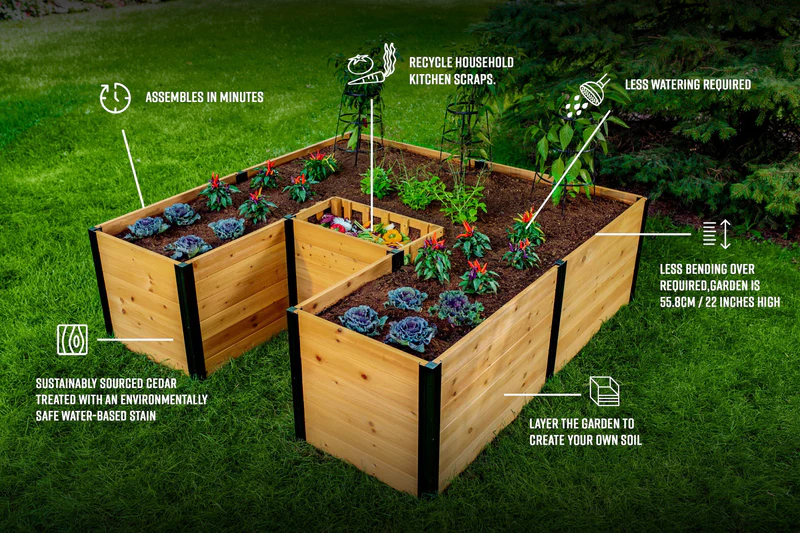
There are several ways to compost your waste. One of the keys to successful composting is maintaining a good balance between carbon-rich and nitrogen-rich materials.
Composting is easy. That’s what you read everywhere. There are so many ways to compost your waste. You can compost your waste using a hot composting method, make a pile at the back of your garden, and even compost your waste directly on the surface of your vegetable patch.
It’s important to know that compost can generate some unpleasant odors and attract rodents. We’ll see together how to maintain it to avoid these temporary problems.
To avoid any issues with your neighbors, we advise you not to place your compost bin under their window. Avoid placing your compost bin in a small, hard-to-reach space. You’ll have to throw in your waste, shred branches, collect wheelbarrows of compost, or even dump wheelbarrows of waste into it. You also need enough space to mix it with a pitchfork without having to contort yourself.
Set up your composter on a flat surface
While the composter needs some sun, it doesn’t need as much sun as your tomatoes. Partial shade can be a good choice, as too much sun and heat can dry out your compost and slow down the decomposition process, but total shade has the opposite effect, resulting in overly wet compost. In hot weather, you can water your compost with wastewater such as cooking water (without salt) from rice, pasta, or potatoes.
One last tip: set up your composter on a flat surface to prevent your waste from falling over each time you add more.
How a compost bin works
One of the keys to successful composting is maintaining a good balance between carbon-rich and nitrogen-rich materials. That is, between dry and wet materials. For each addition of nitrogen-rich material, you should add a third of carbon-rich material such as dead leaves, shredded branches, or straw.
Another tip for creating ideal compost to nourish your vegetable garden is to mix your compost with each addition. This will oxygenate your compost pile and activate the decomposition of the waste materials.
One last piece of advice from the waste management pros at Dumpster Rental, Tucson, AZ: don’t hesitate to leave your compost exposed to the air, unless the rain is too heavy, and moisten it with the cooled cooking water from your vegetables, pasta, or rice.
How much compost should you add to your vegetable garden
After a few months, you will have a soil amendment for your vegetable plots. The idea is to spread compost on your different growing areas to enrich your soil and make it more fertile. With 1 kg of compost, you will have approximately 5 g of nitrogen.
Given that plants need approximately 5 to 20g of nitrogen for healthy growth and, above all, good fruit production, you will need 3kg of compost per square meter.